
AC Running but the House Won't Cool on a Humid Day? What's Wrong
Quick Answer: If your AC is running but the house won't cool on a humid day, the system is usually losing the fight against moisture rather than temperature. A dirty filter or coil, low refrigerant, an oversized unit that shuts off too soon, or weak airflow all leave humidity behind, and damp air feels warm no matter what the thermostat reads. The fix starts with finding which of those is happening, not with pushing the setting lower.
It is the middle of a July afternoon, the air outside feels thick enough to lean on, and your air conditioner has been running without a break since lunch. You can hear it going. You can feel air moving at the vents. And the living room still feels like a warm, damp towel, the thermostat sits a few degrees above where you set it, and no one wants to sit down. So you walk over and push the setting down another couple of degrees. An hour later nothing has changed except the sound of a system that never shuts off.
That combination, a unit that runs and runs while the house stays warm and sticky, is one of the most common calls of a Philadelphia-area summer. It feels like the air conditioner is broken, but very often the machine is doing part of its job and failing at the other part. On a humid day, cooling a house is really two jobs, and understanding the difference explains almost everything about why the room refuses to feel comfortable.
Cooling the air and drying the air are two different jobs
An air conditioner is not only a temperature machine. It handles two separate loads every time it runs, and on a muggy day the balance between them changes.
Sensible heat is the warmth you can read on a thermostat
This is the straight temperature of the air, the part that drops when the system pulls heat out of the room. On a dry day this is most of the work, and a healthy unit knocks it down without much trouble.
Latent heat is the moisture hiding in the air
Humidity carries its own load of energy, and the only way an AC removes it is by running the indoor air across a coil cold enough to condense water out of it, the same way a cold glass sweats on a summer day. That water drips into a pan and out the condensate line. If the coil never gets cold enough for long enough, the moisture stays in the air.
The split between the two is called the sensible heat ratio
A system running at a ratio around 0.70 is spending roughly 70 percent of its effort on temperature and 30 percent on moisture. During a humid stretch, an air conditioner can end up devoting 30 to 40 percent of its capacity just to wringing water out of the air. When that moisture work falls behind, the temperature may drop a little, but the room still feels warm because the air is still wet.
The common reasons the air moves but the room stays sticky
When you have air coming from the vents but no real comfort, a handful of causes are usually behind it. Sorting out which one you have is the whole game.
A clogged air filter
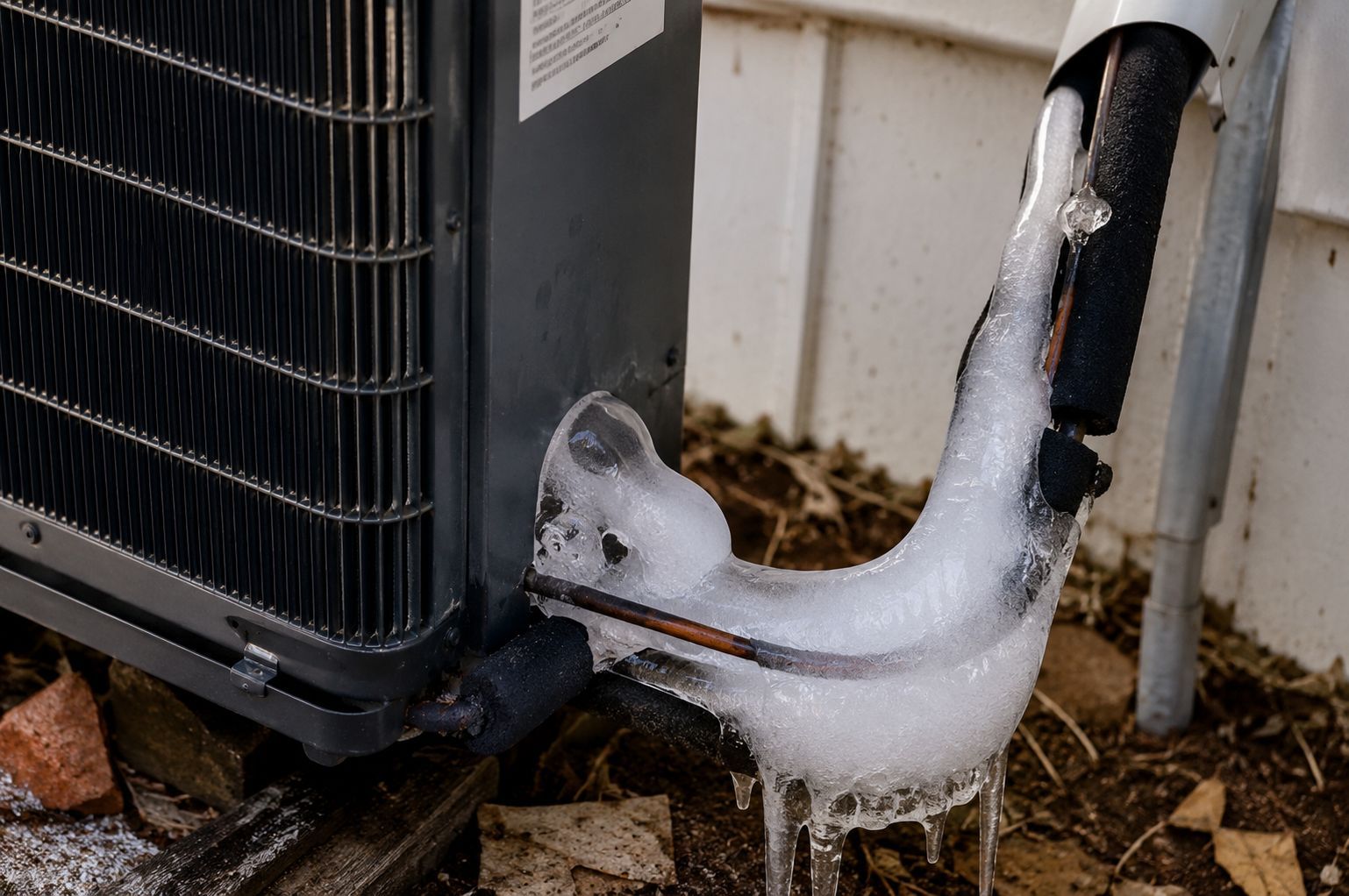
A dirty filter chokes the airflow moving across the coil. Less air over the coil means less moisture pulled out and weaker cooling overall, and a badly restricted filter can even lead to the system icing up and shutting itself down. This is the first thing worth checking and the easiest to fix.
A dirty evaporator coil or low refrigerant
The indoor coil has to get genuinely cold to condense water out of the air. A coil caked with dust, or a system low on refrigerant from a slow leak, cannot hold that temperature. The unit runs hard, removes little moisture, and on the worst days the coil may frost over instead of draining water.
An oversized unit that shuts off too soon
This one surprises people, because it feels like a bigger air conditioner should cool better. In humid weather it works against you. A coil needs roughly 10 to 12 minutes of continuous running before it starts draining real moisture, and a healthy cooling cycle usually runs about 10 to 20 minutes. An oversized unit blasts the temperature down and satisfies the thermostat in six or seven minutes, shuts off before the coil ever drains water, and leaves the humidity right where it was. The house gets cold and clammy instead of cool and dry.
Weak airflow from the ductwork
Undersized, leaky, or crushed ducts, especially the retrofitted runs common in older homes, keep air from moving over the coil at the right pace. Too little airflow and the system cannot carry heat and moisture away efficiently, so the far rooms stay warm and damp while the system labors.
A thermostat in a bad spot
A thermostat sitting in direct sun, near a lamp, or above a warm appliance reads a temperature that does not match the rest of the house. It can shut the system down early or run it at the wrong times, throwing off the long, steady cycles that actually dry the air.
TIP:
On a humid day, check the condensate drain line while the system has been running for a while. If little or no water is draining after the unit has been on for fifteen or twenty minutes, the coil is not pulling moisture out of the air. That points toward short cycling, low refrigerant, or an airflow problem rather than anything you can fix by touching the thermostat.
What the cool-but-clammy feeling is really telling you
The reason a running AC can still leave you uncomfortable comes down to how your body reads humidity, and it is not in your head.
Damp air feels warmer than it is
Your body sheds heat partly by evaporating sweat off your skin, and that only works when the surrounding air is dry enough to accept the moisture. When indoor humidity climbs past about 60 percent, evaporation slows, and the same room temperature feels several degrees warmer than the thermostat claims. Keeping indoor relative humidity below 60 percent, and ideally somewhere between 30 and 50 percent, is what actually makes a room feel cool.
The temperature number can lie to you
A house held at 74 degrees with dry air feels crisp and comfortable. The same 74 degrees with humid air feels heavy and warm. The thermostat reads the same in both cases, which is exactly why a system that only chases temperature leaves you sweating on the worst days.
Chasing it with a colder setting usually backfires
When the room still feels warm, the natural move is to drop the thermostat further. That mostly just makes the system run longer and colder without removing much more water, and it can start causing its own trouble.
How the problem actually gets diagnosed
Because so many different faults produce the same warm, sticky result, sorting it out takes measurement rather than guessing. A technician looks at the whole moisture chain, not just the temperature.
That means checking the filter and the evaporator coil for anything choking airflow, testing the refrigerant charge so the coil can actually get cold, and measuring the airflow and static pressure moving through the ductwork. It means watching how long the system runs before it shuts off, since a unit that satisfies the thermostat in a handful of minutes is never going to dry the air. And it means confirming that the condensate line is really draining water when the system runs on a humid day, which is the clearest proof that moisture is leaving the house instead of hanging in the rooms.
What you get from that is the actual reason your house feels the way it does, whether it is a coil that needs cleaning, a low charge that needs correcting, ductwork that cannot move enough air, or a unit so oversized that it can never run long enough to dry the place out. That is a far better position than a summer of nudging the thermostat and hoping.
The Repairs You Should Expect
Most emergency repairs fall into a handful of predictable categories, and you should expect a clear explanation of which one you are facing. The common quick fixes involve a failed capacitor, a worn ignitor, a dirty flame sensor, or a tripped safety that needs to be reset and traced back to its cause. These get heat or cooling running again the same visit. Deeper failures, such as a cracked heat exchanger, a seized blower motor, or a refrigerant leak, take longer and sometimes require a part to be ordered. A trustworthy technician tells you plainly which bucket your problem falls into and never inflates a small fix into a large one.
Frequently Asked Questions
Why does my house feel humid even though the AC is running?
Your air conditioner cools and dehumidifies separately. A dirty coil, low refrigerant, weak airflow, or short cycling can leave excess moisture indoors, making your home feel sticky and uncomfortable even when the thermostat shows a cool temperature.
Is it better to lower the thermostat or let the AC run longer?
Longer, steady cooling cycles remove more humidity than drastically lowering the thermostat. The evaporator coil needs time to extract moisture, so consistent operation improves indoor comfort without unnecessarily overcooling your home or increasing energy use.
Can a dirty filter really keep my house from cooling?
Yes. A clogged air filter restricts airflow across the evaporator coil, reducing cooling and moisture removal. Severe airflow restrictions can even cause the coil to freeze, making regular filter replacement an essential part of AC maintenance.
Why does this only happen on humid days and not dry hot days?
Humid days require your AC to remove much more moisture in addition to cooling. Any issue with airflow, refrigerant, or the evaporator coil becomes more noticeable, leaving your home feeling damp despite continuous system operation.
Would a bigger air conditioner cool my house faster on humid days?
Not usually. An oversized air conditioner cools rooms too quickly and shuts off before removing enough humidity. Properly sized systems run longer cycles, improving moisture removal and creating a more comfortable indoor environment throughout the day.
How do I know if it's low refrigerant or something else?
Different AC problems often produce the same symptoms. A professional technician checks refrigerant levels, airflow, coil condition, system performance, and condensate drainage to accurately identify whether low refrigerant or another issue is causing excess indoor humidity.
Getting real relief on a humid day
A house that stays warm while the air conditioner runs nonstop is almost never about the temperature alone. On a humid day the real battle is moisture, and when a dirty coil, a low charge, weak airflow, or an oversized unit keeps the system from drying the air, the room feels heavy no matter what the thermostat says. The answer is not a colder setting but a system that can run long enough and cold enough to pull the water out, and the first move is finding which link in that chain is failing. Once the moisture is handled, the same house that felt like a damp towel starts to feel genuinely cool again.
Schedule a humid-day cooling checkup — Stop fighting a house that stays warm and sticky no matter where you set the thermostat. A technician measures your system's run time, refrigerant charge, and airflow, checks the coil and filter, and confirms how much water the coil is actually draining, then pinpoints whether a dirty coil, a low charge, an oversized unit, or weak airflow is leaving moisture behind and corrects it. Backed by 25 years of experience serving Broomall, Pennsylvania, Phoenix Home Services, LLC brings licensed and insured technicians and a 100% satisfaction guarantee to every visit. Book your AC assessment today and get a home that feels as cool as the number on the wall.